








London’s most famous landmarks are close together on a map but confusing on the ground. The Tower of London, Westminster Abbey, Buckingham Palace and the Houses of Parliament each draw enormous crowds and each has its own ticketing system, access restrictions and seasonal variations. Navigating all of them in sequence without local knowledge is possible but wasteful of limited holiday time. Evan Evans Tours builds itineraries that connect these sites in an order that makes geographic and historical sense, so visitors spend less time working out logistics and more time actually seeing things.
The Tower of London Beyond the Crown Jewels
Most visitors arrive at the Tower of London for the Crown Jewels and leave having seen little else. The site is actually a medieval fortress that expanded across centuries and its interior holds the remnants of royal apartments, an ancient chapel and the stories of some of the most dramatic events in English history. Anne Boleyn was imprisoned and executed here. Walter Raleigh wrote parts of his History of the World in the Bloody Tower. The ravens that live on the grounds have their own official keeper and their own place in centuries of legend.
A guided approach gives these details their proper weight. Without context, the Tower is a series of stone rooms. With a guide, it becomes a place where history has genuine texture and the gaps between rooms carry meaning.
Westminster and the Seat of British Government
The stretch of the Thames between Westminster Bridge and Lambeth Bridge contains a concentration of institutional architecture unlike anywhere else in London. The Houses of Parliament, Westminster Abbey and the Supreme Court all sit within walking distance of each other and each operates independently with its own access requirements.
Westminster Abbey alone contains more than three thousand memorials and graves, including those of Geoffrey Chaucer, Charles Dickens, Isaac Newton and Stephen Hawking. Knowing where to look and what to look for transforms a visit from a crowded shuffle through a vast building into something more focused and memorable. Evan Evans Tours provides that kind of structure for visitors who want to get more out of their time in Westminster than the average tourist manages.
Buckingham Palace and the Changing of the Guard
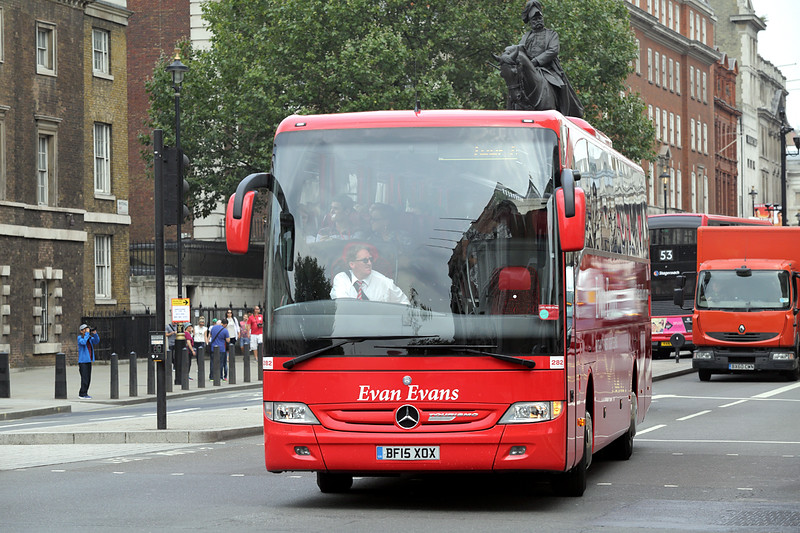
The Changing of the Guard at Buckingham Palace runs on a schedule that changes depending on the season and other commitments of the Household Division. Arriving without knowing whether the ceremony is scheduled that day results in a long wait at the gates with nothing to show for it. Evan Evans Tours tracks these schedules and plans accordingly, so visitors who join a guided itinerary arrive at the right time.
- The ceremony typically lasts around 45 minutes when it takes place
- Viewing positions along the Mall fill up quickly on days when the ceremony runs
- The palace interiors open to visitors during summer months only
- The Queen’s Gallery operates year-round with rotating exhibitions from the Royal Collection
- St James’s Park, adjacent to the palace, offers some of the best views of the ceremony from a distance
For visitors who have seen the ceremony before or who prefer to avoid large crowds, a guided walk of the surrounding area, including Clarence House and St James’s Palace, provides a different and less congested perspective on the same neighborhood.
The South Bank and a Different View of the City
Crossing the Thames from the north to the south bank changes the character of London considerably. The Tate Modern, Shakespeare’s Globe, Borough Market and the Shard all cluster on the south side and the views back across the river toward St Paul’s Cathedral and the financial towers of the City are among the most photographed in England. Evan Evans Tours
The Millennium Bridge, which runs between Tate Modern and St Paul’s, offers a walking approach that gives visitors a close look at both riverbanks in a short distance. The bridge’s steel structure and the dome of St Paul’s in the background make for a combination that has become something of a visual shorthand for London as it looks today, as opposed to how it looked two centuries ago.
Greenwich and the Line That Divides the World
Greenwich sits east of central London and holds a particular place in global history. The Prime Meridian, from which all longitude is measured, runs through the Royal Observatory on the hill above the Cutty Sark and the National Maritime Museum. Standing on the line, with one foot in the eastern hemisphere and one in the western, is the kind of specific, slightly absurd experience that makes travel stick in memory long after the trip ends.
The Painted Hall at the Old Royal Naval College is another Greenwich highlight that rarely gets the attention it deserves. Its ceiling fresco, painted by James Thornhill over nearly two decades in the early eighteenth century, has been compared favorably with the Sistine Chapel by visitors who encounter it without prior expectation, which is a reasonable comparison once you are standing beneath it.
Planning a London Tour That Covers the Right Ground
The challenge for most London visitors is not finding things to see but deciding what to leave out. The city has more museums, galleries, historic buildings and significant streets than any two-week holiday can absorb. The practical solution is to prioritize by personal interest rather than by reputation or the order things appear in a guidebook.
First-time visitors tend to benefit most from structured tours that cover the main landmarks with expert commentary. Repeat visitors often prefer more focused itineraries built around a specific period of history or a particular part of the city. Evan Evans Tours offers both types, which means the same operator can serve a visitor on their first trip and again on their third without repeating the same experience.
Choosing a guided tour for at least part of a London visit reduces the planning burden significantly and almost always leads to discovering something that independent exploration would have passed by entirely.